Back to Blogs
Compare the best ways to implement an AI NVR, including existing-camera retrofits, hybrid edge and cloud systems, and full replacements.
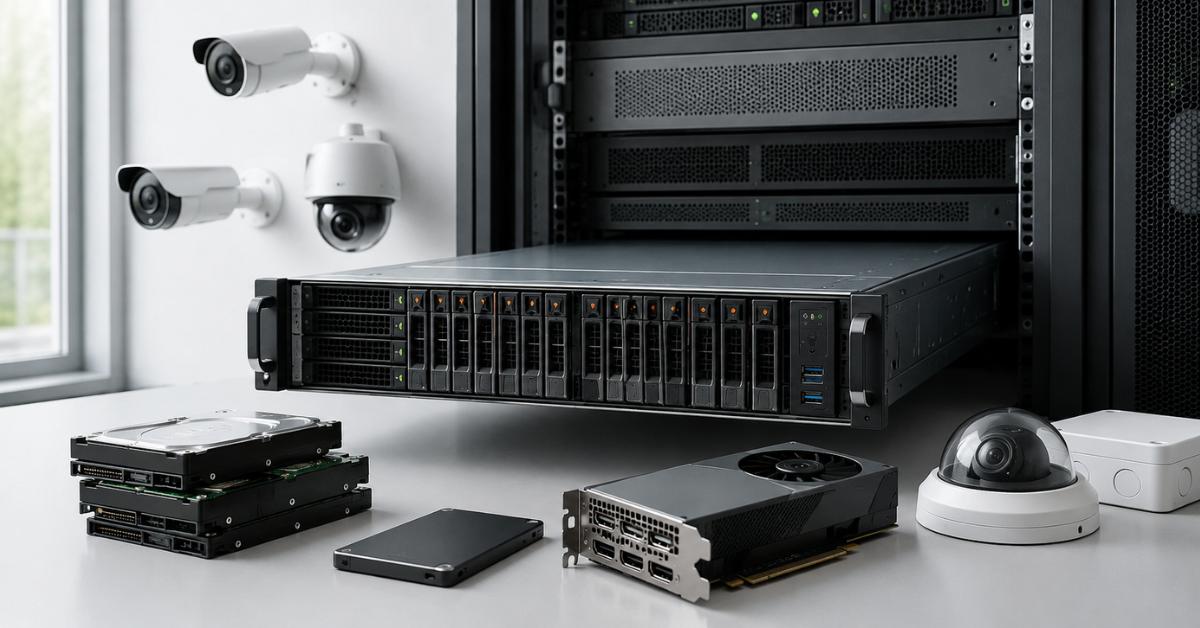
Businesses looking to add AI to their video security systems have several implementation options. The right approach depends on the cameras already installed, the condition of the existing recording system, networking requirements, desired AI capabilities, and budget.
For many organizations, implementing an AI NVR does not require replacing every camera. A compatible existing camera network can often be connected to a newer AI-powered recording and management platform, adding capabilities such as video search, alerts, analytics, remote access, and centralized management.
There are three common approaches to consider: retrofitting existing cameras, using a hybrid edge and cloud architecture, or replacing the camera and recording system entirely.
A Network Video Recorder, or NVR, records and manages digital video from cameras connected over a network.
An AI NVR adds processing power and video intelligence to that recording layer. Instead of simply storing footage for later review, an AI-enabled system can analyze and index video so authorized users can search footage, configure alerts, review analytics, and investigate incidents more efficiently.
LiveReach AI-NVRs use GPU-powered processing and can support 4K video streams for AI search and analytics. The AI-NVR connects the local camera environment with LiveReach's cloud-connected video management platform.
For businesses with functional cameras already installed, retrofitting the existing system can be one of the most practical AI NVR implementation strategies.
Instead of replacing cameras, the organization upgrades the recording and intelligence layer.
This approach can help businesses:
LiveReach is designed to work with compatible analog, IP, and hybrid camera environments, which can make this approach useful for organizations that already have a significant investment in camera infrastructure.
Compatibility still needs to be evaluated. Camera type, video quality, network configuration, protocols, and the capabilities required for the deployment can all determine whether existing equipment should remain in place.
Another option is a hybrid architecture that combines local processing with cloud-connected management.
With this model, the AI NVR sits on site and handles core video processing and storage while connecting authorized users to cloud-based tools for search, alerts, analytics, and centralized management.
This approach can provide several advantages.
GPU-powered processing at the edge allows the AI NVR to analyze video close to where it is generated.
This can support AI search, analytics, and configured detections without requiring every video-processing task to occur remotely.
Authorized users can access video security tools remotely and manage cameras across one or multiple locations through a centralized platform.
For organizations with distributed offices, stores, manufacturing plants, schools, or other facilities, this can simplify oversight compared with managing a separate recording system at every location.
A hybrid architecture can also make it easier to expand gradually. Organizations can modernize one location, add cameras or sites later, and centralize management as the deployment grows.
Businesses should still evaluate bandwidth, storage, retention, networking, and remote-access requirements when determining whether a hybrid model is the right fit.
A full replacement involves upgrading both the recording system and some or all of the cameras.
This is generally the most hardware-intensive option, but there are situations where replacing existing equipment makes sense.
A business may want to consider camera replacement when:
A full replacement should not automatically be the first recommendation. If existing cameras remain functional and compatible, keeping some of that infrastructure may provide a more cost-effective path to AI video security.
LiveReach can also provide NDAA-compliant IP cameras when new or replacement camera hardware is needed.
The best implementation strategy depends on more than the recorder itself.
Before making a decision, compare:
Determine which existing analog or IP cameras can work with the proposed AI NVR and whether they provide adequate image quality for the AI capabilities you plan to use.
Look at what the platform can actually identify and search for. Depending on the system, this may include people, vehicles, movement, license plates, colors, objects, safety events, or other supported activity.
Evaluate which events can trigger alerts and how those alerts are configured, delivered, and reviewed.
Consider how much video needs to be stored, where it will be stored, and how long footage needs to remain available.
Determine whether authorized users can securely review live and recorded footage away from the physical location.
Organizations with multiple facilities should evaluate whether cameras, alerts, users, cases, and other video security functions can be managed centrally.
Compare the effort required to replace an existing recorder versus replacing cameras, cabling, networking equipment, and other infrastructure.
Consider whether cameras, users, storage, AI features, and additional locations can be added without rebuilding the system.
The lowest equipment price does not necessarily mean the lowest long-term cost.
Evaluate hardware, installation, licensing, storage, networking, maintenance, staff time, and future expansion together.
LiveReach provides an AI-NVR and cloud-connected video security platform designed to modernize compatible existing camera environments.
The LiveReach AI-NVR uses GPU-powered processing to handle video streams locally and supports AI search and analytics across 4K video. Businesses can use the platform to add capabilities such as:
LiveReach works with compatible analog and IP cameras, so organizations may be able to preserve much of their current camera infrastructure rather than defaulting to a full replacement.
For businesses that need new hardware, LiveReach can also provide NDAA-compliant IP cameras.
This gives organizations flexibility to take a mixed approach. Existing cameras can remain where they still meet requirements, while outdated cameras or coverage gaps can be addressed selectively.
There is no single implementation strategy that is right for every organization.
For a business with compatible cameras and good existing coverage, retrofitting an AI NVR may offer the simplest path to modernization.
For organizations that want local processing combined with remote access and centralized multi-site management, a hybrid edge and cloud model can be a strong fit.
A full replacement makes more sense when the existing camera environment is outdated, unreliable, incompatible, or unable to provide the video quality and coverage required.
The best starting point is to evaluate the existing camera environment before deciding how much hardware actually needs to change.
For businesses with compatible existing cameras, one approach is to replace or supplement the current recording system with an AI-enabled NVR.
This can add AI search, alerts, analytics, and cloud-connected management while allowing compatible cameras to remain in place.
Yes, depending on the camera environment.
LiveReach is designed to work with many compatible analog, IP, and hybrid camera systems. Compatibility should be confirmed based on the specific cameras, network, and AI capabilities required.
A traditional NVR primarily records, stores, and manages digital video.
An AI NVR adds computing capabilities that can analyze and index video for features such as AI-powered search, configured alerts, analytics, and faster incident review.
Neither approach is automatically better for every deployment.
Edge processing can keep significant video-processing workloads on site, while cloud-connected management can make remote access and multi-location administration easier.
A hybrid architecture combines aspects of both and may be useful for organizations that want local processing along with centralized cloud-connected management.
Camera replacement may make sense when existing equipment has poor image quality, unreliable performance, major coverage gaps, compatibility issues, or cannot support the organization's intended use cases.
Businesses with functional compatible cameras may be able to keep much of their existing infrastructure and selectively replace cameras only where necessary.
Implementing an AI NVR does not automatically mean starting over.
LiveReach helps organizations connect compatible existing cameras to an AI-powered video platform with search, alerts, analytics, centralized management, and GPU-powered edge processing.
Request a Demo to see which AI NVR implementation approach makes the most sense for your existing camera environment.
Schedule a demo of our platform to see how LiveReach can improve security at your organization.
Request Demo