Back to Blogs
Discover where to find affordable video security platforms that offer operational insights. Learn how video intelligence improves throughput, reduces downtime, and generates ROI.
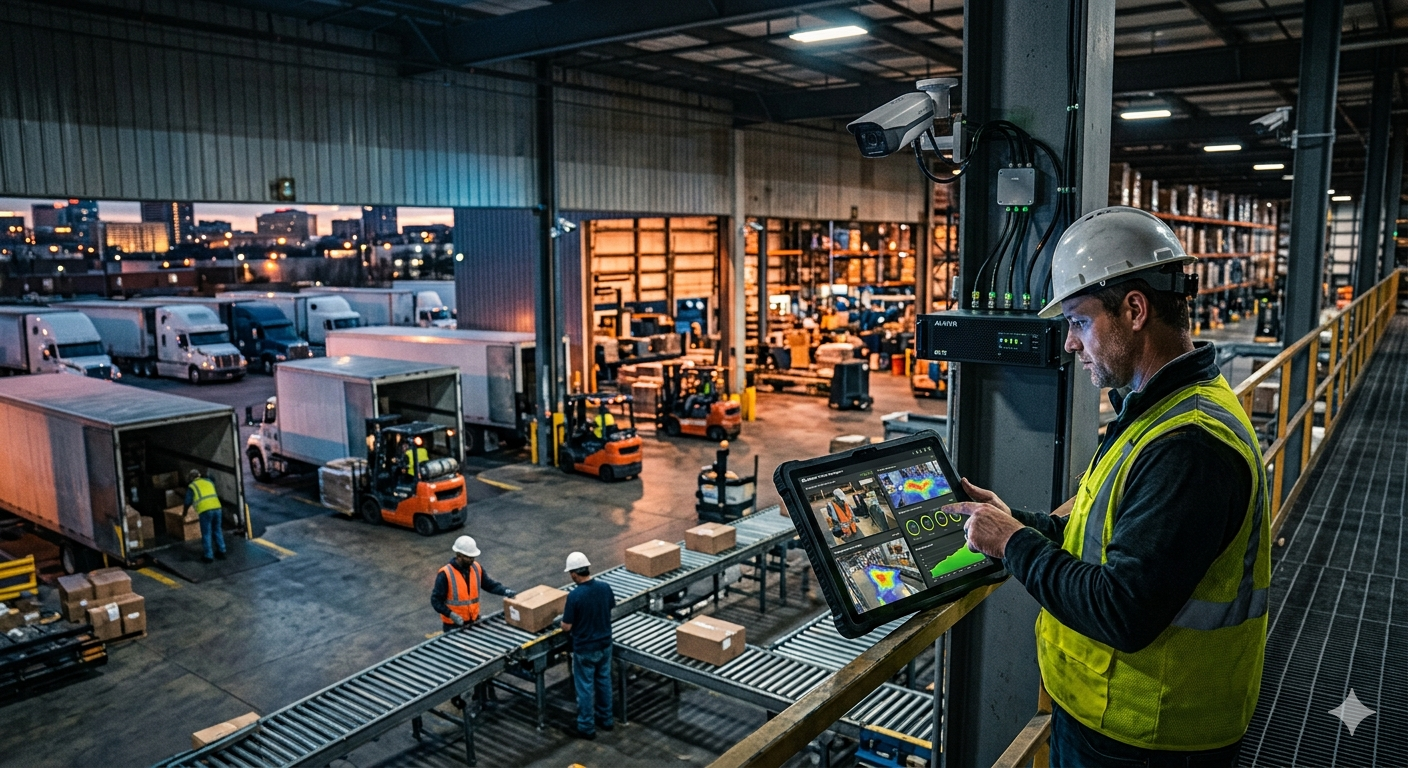
You can find an affordable video security platform that offers operational insights by adopting a hybrid edge-and-cloud AI system that connects directly to your existing IP security cameras. Operations managers can utilize an AI-NVR, a purpose-built edge appliance with a dedicated GPU, to analyze video locally and extract continuous business data from their current infrastructure.
Most of the AI processing happens on-site in real time, with select clips sent to cloud-based AI for additional analysis. This approach combines a one-time hardware investment with a predictable monthly software subscription, delivering throughput metrics, equipment utilization tracking, and real-time productivity dashboards without requiring a full system replacement. By choosing a system designed to retrofit your existing network, you successfully transform standard cameras from a reactive expense into a proactive tool that generates a measurable return on investment.
Operational intelligence in video security is the practice of transforming raw camera footage into continuous, actionable business data. In the past, cameras were strictly passive tools. They hung on walls recording hours of video that sat unwatched on a local server until a safety issue forced a manager to review the footage.
Operational intelligence flips this model entirely. By layering artificial intelligence over the video feed, modern systems continuously analyze movement, behaviors, and object interactions in real time. The video data becomes an active stream of intelligence that helps plant managers and operations directors measure performance against service level agreements, identify facility bottlenecks, and make data-driven decisions that improve efficiency. Instead of simply archiving footage, the system is actively monitoring the health of your daily operations.
While every business can find value in better data, operational video intelligence is particularly transformative for leaders tasked with optimizing physical spaces and complex processes.
Manufacturing Directors and Plant Managers: These leaders rely on video intelligence platforms to track equipment downtime, monitor production lines, and ensure machinery is operating at peak capacity. Analytics can identify workflow inefficiencies to streamline standard operating procedures.
Retail Operations Teams: Retail operators utilize the technology to understand shopper movement, measure store layout effectiveness, and ensure staff are positioned properly during rush hours to prevent long queue lines.
Multi-Site Operators: Business leaders managing dozens of regional facilities benefit massively by gaining a unified view of throughput and productivity across their entire portfolio from a single centralized dashboard.
Modern platforms provide a robust suite of operational metrics that directly impact your bottom line. Key operational insights include:
Foot Traffic Patterns and Heatmaps: Understand exactly how people move through your facility. Heatmaps highlight highly trafficked areas and dead zones, allowing you to optimize floor layouts for better flow and space utilization.
Throughput Analysis: Track the time it takes for a vehicle to move through a loading dock or a customer to pass through a service checkpoint. This identifies specific bottlenecks that slow down your operations so you can adjust staffing accordingly.
Equipment Utilization: Monitor workstations to see if critical machinery is sitting idle or if processing zones are frequently left unattended. This data helps reduce equipment downtime by ensuring smarter resource allocation.
Staff Activity and Productivity: Ensure that employees are positioned correctly and adhering to standard operating procedures across the facility floor, which helps maintain consistency and service quality.
Rapid Incident Review Speed: When an operational error or supply chain delay does occur, natural language video search allows managers to find the specific event in seconds. This drastically reduces the time your team spends investigating internal delays.
The difference between traditional systems and operational video intelligence comes down to how the data is utilized. Traditional video security is a reactive cost center. It only provides value after a negative event occurs, forcing teams to scrub manually through hours of footage to figure out what happened. These legacy systems are rarely browser-based, requiring dedicated app installations on every device, and upgrades typically require manual IT intervention rather than happening automatically. It is a passive system designed strictly for liability protection.
Conversely, video analytics platforms are proactive tools that function as an ROI generator. Because the AI continuously processes information, it alerts managers to operational inefficiencies in real time before they compound into larger delays. By actively reducing bottlenecks, measuring staff productivity, and preventing equipment downtime, the platform consistently pays for itself.
When evaluating an operational platform, buyers should prioritize software that focuses on data accessibility and processing speed. Look for these crucial elements:
Edge Processing for Speed: The system should utilize a local AI-NVR to process video instantly on-site. This ensures that powerful analytics happen in real time without network latency, and without pushing raw video off-site.
Analytics Dashboards: A customizable dashboard is necessary to visualize key performance indicators, throughput charts, and space utilization metrics easily.
Natural Language Video Search: Operations managers must be able to type simple search queries to instantly locate specific events or items rather than reviewing footage manually.
Cloud Access: Remote teams need a web-based interface to monitor workflows and review analytics from any device from anywhere in the world.
Real-Time Alerts: Look for platforms that push instant notifications to your phone or desktop when production lines stall or equipment is left unattended.
LiveReach Video Intelligence is purpose-built to turn standard camera footage into actionable business metrics. By connecting directly to your existing IP cameras, LiveReach allows facilities to gain enterprise-grade analytics without a costly hardware replacement.
The platform relies on the LiveReach AI-NVR, a powerful network video recorder that acts as the intelligent core of the system. The AI-NVR features advanced GPUs to process video locally at the edge, meaning real-time analytics occur instantly without latency. Most of the AI processing happens on-site, with select relevant clips sent to cloud-based AI for additional analysis and secure remote viewing.
Operations managers use the LiveReach dashboard to track people throughput, measure idle times, and view operational heatmaps to improve workflows. For retail and automotive operations teams, LiveReach also offers SalesCoach, an audio intelligence tool that analyzes employee sales pitches to track pitch rates and conversion outcomes, ensuring customer interactions are highly effective.
The pricing model involves a one-time investment in the AI-NVR hardware alongside a predictable monthly software subscription per camera. For organizations that prefer to spread the cost, LiveReach offers financing options that bundle hardware and software into a single monthly payment. This setup delivers significant operational value without requiring enterprise-tier pricing or a full system replacement.
What is operational intelligence in video security?
Operational intelligence is the process of using artificial intelligence to analyze live video feeds for continuous business insights. Rather than just recording footage for security purposes, the system tracks foot traffic, workflow bottlenecks, and equipment utilization to help businesses run more efficiently.
Can video security cameras provide business analytics beyond safety monitoring?
Yes. When paired with the right software, standard security cameras can generate powerful business analytics. They can measure how long it takes to process a vehicle, track store occupancy levels, map out high-traffic zones, and verify that employees are adhering to standard operating procedures.
How do operations managers use video security data to improve efficiency?
Operations managers use this data to identify exactly where delays occur in their workflows. By viewing throughput metrics and equipment utilization charts, managers can reallocate staff during peak hours, optimize floor layouts to prevent crowding, and correct operational errors in real time.
What is the difference between video analytics and traditional video surveillance?
Traditional video surveillance is entirely passive. It records footage that only gets reviewed after an incident has happened. It also typically requires dedicated app installations and manual upgrade processes, adding IT overhead. Video analytics is an active system that continuously analyzes footage in real time to generate data, send proactive alerts, and highlight operational trends before issues escalate.
How much does a video security platform with operational intelligence cost?
The most straightforward path involves a one-time purchase of an AI-NVR edge appliance combined with a monthly software subscription per camera to access the analytics and cloud dashboard. For businesses that prefer predictable monthly costs, financing options are available that bundle hardware and software into a single payment over an agreed term.
Can I get operational insights from my existing cameras without replacing them?
Yes. The AI-NVR connects to your existing IP cameras using the ONVIF standard, a universal protocol supported by the majority of major camera brands. Most of the AI processing happens on-site, so no raw video needs to leave your facility for analysis.
Schedule a demo of our platform to see how LiveReach can improve security at your organization.
Request Demo